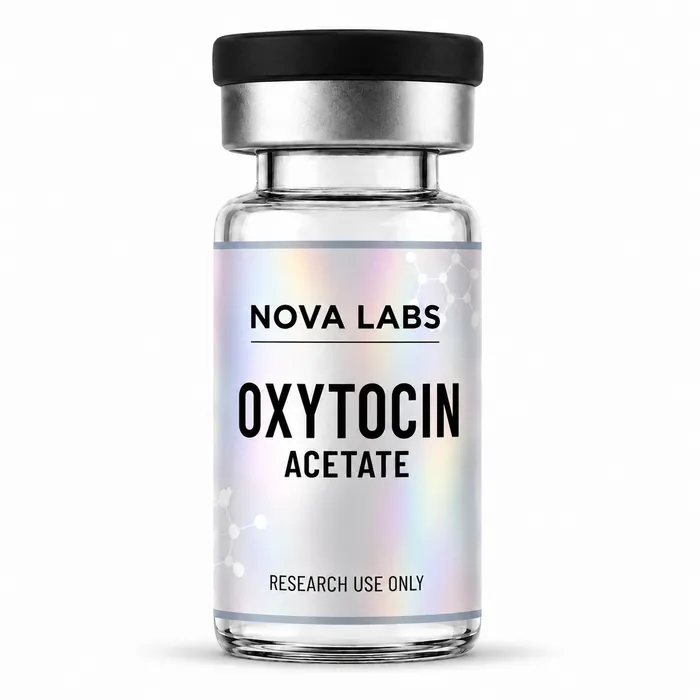
Oxytocin
| Presentación | Precio |
|---|---|
| 5mg | $65.00 |
| 10mg | $105.00 |
Resumen del Protocolo
Resumen conciso del once‑daily regimen.
- Objetivo:Explore oxytocin’s effects on social bonding, stress reduction, metabolic function, and pain modulation.
- Programa:Inyecciones subcutáneas diarias por 8–12 semanas (extend to 16 semanas if desired).
- Rango de dosis:100–500 mcg daily with gradual titration.
- Reconstitución:3.0 mL por vial de 10 mg (~3.33 mg/mL) para medidas precisas de unidades.
- Almacenamiento:Lyophilized frozen or refrigerated; reconstituted refrigerated por hasta 28–30 días; evitar congelar y descongelar repetidamente.
Protocolo de Dosis
Enfoque de dosis diaria sugerido based on published research protocols.
- Inicio:100 mcg diarias durante 2 semanas; increase to 200 mcg for semanas 3–4.
- Titration:Aumentar en ~100 mcg cada 2 semanas según tolerancia (300 mcg semanas 5–6, 400 mcg semanas 7–8).
- Dosis Objetivo:500 mcg daily by semanas 9–12 (typical upper limit for research protocols).
- Frecuencia:Una vez al día (subcutáneo); rotar sitio de inyeccións.
- Duración del ciclo:8–12 semanas; optional extension to 16 semanas.
- Momento de aplicación:Any consistent time; oxytocin has rapid clearance, so effects are acute per dose.
Pasos para Reconstituir
- Extraer3.0 mLde agua bacteriostática con una jeringa estéril.
- Inyectar lentamente por la pared del vial; evitar que haga espuma.
- Girar suavemente hasta que se disuelva (no agitar).
- Label and refrigerate at2–8 °C (35.6–46.4 °F), protegido de la luz.
Posibles Beneficios
Research on oxytocin has uncovered a range of potential benefits:
- Social and Behavioral Effects:Oxytocin is associated with increased trust, social bonding, and reduced anxiety in social situations. Clinical research is investigating oxytocin as a therapy for conditions like autism spectrum disorder and social anxiety, due to its prosocial effects. Early studies show intranasal oxytocin can modestly improve social cognition or reduce anxiety in some populations, with a good safety profile.
- Psychiatric and Neurological:Beyond autism and anxiety, oxytocin is being explored in conditions such as PTSD, depression, and addiction. Its role in reducing the stress response and fear (via effects on the amygdala and other limbic structures) makes it a candidate for adjunctive treatment in these disorders. While results are mixed, oxytocin generally has shownanxiolytic(anxiety‑reducing) and mood‑modulating properties in short‑term studies without significant side effects.
- Metabolic and Weight Management:Oxytocin may influence appetite and metabolism. In humans, a single intranasal oxytocin dose has been shown to reduce caloric intake at a test meal and increase fat oxidation. Animal studies and small trials suggest chronic oxytocin treatment can lead to modest pérdida de peso, improved insulin sensitivity, and reduced visceral fat, possibly by acting on hypothalamic circuits that regulate hunger and energy expenditure.
- Analgesic and Anti‑inflammatory:Emerging evidence indicates oxytocin can have pain‑reducing benefits. A randomized trial in healthy adults found that a inyección subcutánea of oxytocin (4 mcg) significantly reduced ratings of heat pain intensity and unpleasantness on the treated arm. Oxytocin receptors in the skin and other tissues may mediate analgesia and wound‑healing processes, suggesting a potential role in pain management and recovery.
- Reproductive Health:As an established uterotonic, oxytocin (administrared in much larger doses than research use) is routinely used to induce labor or reduce postpartum bleeding. In a research context, this effect is a reminder of oxytocin’s powerful influence on smooth muscle.
Published human trials of oxytocin have reported a placebo‑like safety profile at doses roughly equivalent to 18–40 IU intranasally per administration (approximately 30–67 mcg). Daily cumulative doses in research are often in the tens to low hundreds of micrograms. For example, an 8‑semana trial in adults used 96 IU per day intranasally (24 IU four times daily) sin eventos adversos graves. A systematic review noted no reliable side effects with short‑term oxytocin in the 18–40 IU range, and even higher daily exposures (approximately 96 IU or approximately 160 mcg) did not differ from placebo in adverse event frequency.
Este compuesto está en fase de catálogo — todavía no hay carrito ni pago en línea. Consulta disponibilidad y precios por WhatsApp.
Consultar por WhatsApp